



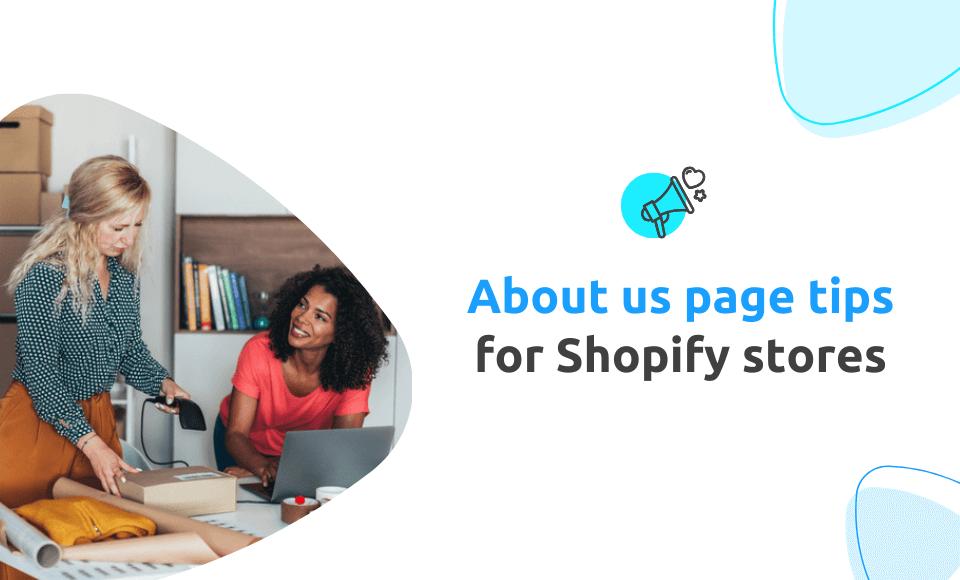
Many About Us pages end up as an afterthought, yet a well-crafted About Us page reduces buyer hesitation, builds trust, and helps turn uncertain visitors into loyal customers. For Shopify stores in Australia, small but strategic improvements to copy and layout can boost credibility, reduce support queries, and increase click-throughs to products. This article shares clear, actionable techniques and examples you can implement quickly, along with useful tips on what to test next so you can measure impact and optimise results.
An effective About Us page speaks directly to your potential customers by answering key questions: Who are you? Why does your store exist? What makes you trustworthy? In today’s competitive and often complex eCommerce environment, where shoppers expect transparency and fast answers, getting this right can shorten the decision process and improve conversions. From simple storytelling to local trust signals, you’ll find practical steps tailored for Australian Shopify stores to make your About Us page a crucial part of your sales funnel instead of a dusty or overlooked space.
In this guide, you’ll discover seven proven ways to write an About Us page that builds trust through authentic stories, clear policies, social proof, and compelling calls-to-action. Alongside examples and recommended next steps, this is a resource you can put into action today to elevate your Shopify store’s credibility and customer confidence.
Key takeaways
- Keep your core story short (200–600 words) and lead with the customer problem and your one-sentence hook.
- Surface key trust signals near the top: contact details, returns summary, shipping times and ABN/ACN where relevant.
- Use clear, benefit-focused CTAs above the fold and repeat them after each section to capture motivated visitors.
- Support claims with verifiable social proof: 3–5 short testimonials, press logos with dates, and concise metrics using review schema where possible.
- Use media (founder or factory video, team photos) but optimise for performance with lazy loading and compressed images.
- Test small changes (story, CTA, contact bullets) with A/B tests and track clicks to product pages, time on page and support ticket volume.
Need help with your Shopify store? Discover smarter design that sells
Why an about us page matters for your Shopify store
A clear About Us page closes the trust gap for first-time visitors and helps them decide faster. Visitors want quick answers to who you are, why you exist, and what makes you reliable. Answering these reduces hesitation and supports conversions.
- Build immediate credibility by explaining why your brand exists and who’s behind it, so visitors feel confident about your store right away.
- Reduce pre-purchase anxiety by sharing practical details, returns, shipping times, and contact options, that lower cart abandonment and support enquiries.
- Differentiate your brand by communicating your values and personality beyond just product descriptions; this helps repeat visitors recognise and remember you.
- Support discoverability by using relevant keywords and linking internally from your About Us page to collections and top products, which benefits SEO and makes navigation easier.
(source: Shopify )

A well-designed About Us page closes the trust gap by addressing common customer concerns and reinforcing credibility at key moments.
7 ways to write an About Us page that builds trust
This section covers practical ways to combine storytelling, proof, and useful details to build trust on your About Us page. Start with quick wins like clear copy and simple layout changes, then plan bigger features such as video or structured reviews.
Each item includes a concise headline, a brief explanation, and an example you can adapt for your store.

This example About Us layout shows how structuring content from problem to solution helps reduce uncertainty and guide shoppers toward a confident decision.
1. Tell a clear brand story that connects emotionally
Your origin story should quickly explain the customer problem you solve and the emotion behind your brand in just one to three sentences. This makes your purpose easy to grasp at a glance.
- Begin with a one-sentence hook stating the problem and your intended outcome, for example: “We started in a Melbourne garage to stop cheap gear failing on weekend trips."
- Use first-person or a consistent brand voice to keep the story feeling human and authentic; for instance, “We started in a Melbourne garage to solve torn tent seams for outdoor families."
- Include a brief timeline or three key milestones (founding year, first product, trusted retail partner) so readers see your progress without needing to read a long essay.
For inspiration, check practical About Us examples that use concise hooks and milestones effectively. (source: Search Engine Journal )

Founder videos help humanise the brand and quickly build trust by showing the people and story behind the product.
2. Include the trust-building elements customers look for
Visitors want reassurance that your store is legitimate and buying is straightforward. Show these details clearly and compactly.
- Display contact information: phone, email, customer-service hours, and a physical address or ABN/ACN so local shoppers can verify your legitimacy.
- Summarise returns, shipping times, and warranty or guarantees with short bullet points near the top for quick reference. Example: “30-day returns • Ships within 2 business days from NSW • 12-month workmanship warranty."
- Add security and checkout badges along with a brief privacy notice near CTAs to reduce hesitation before shoppers proceed. Use simple icons rather than lengthy legal text.
HubSpot’s company pages illustrate how clear contact and policy details increase trust when paired with simple, user-friendly layouts. (source: HubSpot )

Using measurable impact and transparency on an About Us page builds trust and shows customers what the brand genuinely stands for.
3. Structure the page to move readers from problem to solution
Organise your content so visitors first understand the problem, then see your solution, followed by proof. This sequence reduces confusion and encourages conversions.
- Start with a short paragraph outlining the customer’s pain point or aspiration, followed by a concise list of product benefits.
- Break the content into scannable sections using clear headings, one-sentence paragraphs and bullet points, which work well on mobile. Place anchor-style CTAs like “Shop the solution" after each section to let motivated visitors act straight away.
- Keep your main narrative between 200 and 600 words. Hide longer policy or proof details behind expandable blocks to avoid overwhelming mobile users.
4. Use visuals, video and behind-the-scenes media
Images and short videos humanise your brand and increase time spent on the page, which builds trust and engagement.
- Include a brief founder or factory video (30–90 seconds) that shows people and processes. Host on YouTube or Vimeo and embed with lazy loading to avoid slowing your site.
- Use authentic team photos or images of your production process, with captions explaining who does what and where products are made, captions are quick trust-builders.
- Optimise images for web performance (compressed files, responsive sizes, descriptive alt text) and use Shopify image sections or a lightweight gallery app to keep loading speeds fast.
For layout ideas balancing media and speed, see design-led About Us pages. (source: Wix )

Featuring real team members and clear reasons to trust the brand reassures customers they’re buying from a legitimate Australian retailer.
5. Show social proof: testimonials, press and concrete metrics
Solid, verifiable proof turns a nice story into a credible business. Present it clearly without clutter.
- Feature 3–5 brief customer quotes with first names, photos, and the products they bought for authenticity. Keep quotes to one sentence each.
- Add press logos or award badges with links and publication dates so visitors can easily verify external recognition.
- Include concise, verifiable metrics like “Over 10,000 customers" or “Rated 4.9/5 across 2,300 reviews". Where possible, use review schema to help search engines and visitors see the proof.
Authentic customer feedback is among the top sales drivers for ecommerce stores today. (source: Yotpo )
6. Place clear calls-to-action to convert visitors into customers
An About Us page without obvious, benefit-focused CTAs misses conversion opportunities. Make the next steps clear.
- Use specific, benefit-driven CTAs such as “Shop ethically made tees" instead of generic phrases like “Learn more." This sets expectations and improves click-through rates.
- Position a primary CTA above the fold, repeat one mid-page, and add a final CTA at the end of the page. Keep the visual style consistent with your brand.
- Add UTM tracking to About Us page CTAs and monitor clicks to product pages so you can quickly measure performance. Strong CTAs combined with clear policy details cut hesitation and may lower cart abandonment.
(source: Baymard Institute ) For tips on increasing conversions through clear calls to action and trust signals, consider our guide on proven strategies to increase e-commerce conversion rate.
7. Add Australian-specific trust signals for local shoppers
If most of your customers are in Australia, local trust signals speed up verification and reassure buyers on pricing and service.
- Show ABN/ACN details, Australian customer-service hours, and a local returns address so domestic buyers know you operate locally.
- Display prices in AUD, include GST where relevant, and highlight popular local payment options like Afterpay, Zip, or PayID to ease payment friction.
- Highlight local partnerships, charity involvement or media mentions to strengthen community credibility.
Digital trust builds from both operational clarity and external validation. (source: McKinsey & Company )
Quick next steps: test, refine and publish your About Us page
Small, measurable improvements are more effective than big, vague rewrites. Choose a few priority tactics and test their impact.
- Begin with the three highest-impact changes: a concise story (200–600 words), clear CTAs, and contact/returns bullet points. Add visuals and social proof once the core content is live.
- Prioritise scannability: use headings, bullets and 1–2 images above the fold to help mobile visitors. Keep this top section short and actionable.
- Run a simple A/B test comparing your current About Us page to an updated version with a clear CTA. Track clicks to product pages, time on page, and conversion rates to decide which elements to keep. Also monitor support tickets and return queries to see if friction reduces. For managing customer expectations and reducing support queries, our article on effective thank you page ideas has useful strategies that complement a strong About Us page.
- Publish with a meta title and description optimised for the phrase about us page, add the page to your footer and main navigation, then promote it in your next email and social posts to attract initial visitors for testing.
Conclusion
A well-crafted About Us page blends a concise brand story, clear trust signals, and tangible proof to turn hesitant visitors into confident buyers. Prioritise quick wins like a clear story, strong calls-to-action, and easily found contact and returns info. Then test visuals and customer testimonials gradually to refine your message and boost conversions. From what I’ve seen working with Australian retail brands, these focused changes can improve both customer confidence and operational efficiency, reducing support requests while increasing sales.
Whatever stage your business is at, you now have a clearer sense of which elements will make your About Us page a productive part of your Shopify store’s growth strategy.
About us page FAQ
How long should my about us page be?
200–600 words. Keep the main narrative concise for mobile readers and hide detailed policies or long proofs behind expandable blocks.
What essential trust elements should I show?
Contact details, a returns and shipping summary, and a local business identifier (ABN/ACN) for Australian stores; present these as short bullets near the top.
Should I include a founder or behind-the-scenes video?
Yes, a 30–90 second video improves engagement; host externally (YouTube/Vimeo) and embed with lazy loading to avoid slowing the page.
Do I need calls-to-action on the about page?
Yes, place a primary, benefit-led CTA above the fold, repeat mid-page and at the end, and add UTM tracking to measure clicks to product pages.
How can I measure whether the about page is working?
Track clicks from the page to product pages, time on page, conversion rate changes, and support ticket or returns volume after updates.
Do I have to include legal policy text on the about page?
No, include brief policy bullets or a short privacy note near CTAs and link to full policy pages for detailed legal text.
Should I show reviews or metrics on the about page?
Yes, feature 3–5 short customer quotes with first names and photos plus clear metrics (e.g. number of customers or average rating) and use review schema where possible.

Leave a comment
This site is protected by hCaptcha and the hCaptcha Privacy Policy and Terms of Service apply.